One Algorithm Rejected You Everywhere and Stanford Just Proved It.
Stanford proved AI hiring tools discriminate at scale, and new lawsuits put the liability on employers. Here is how to measure the bias before it costs you.
Derek Mobley sent more than 100 job applications through Workday's hiring software. He holds a degree from Morehouse College and a record across finance and IT. He was rejected every time, often within minutes, sometimes in the middle of the night, without a single interview.
The system never rested, and it never said yes.
A federal court certified his case as a collective action in February 2026, and applicants had until March 7 to opt in. He’s not an outlier. He’s the warning.
Then it got more personal. On May 23, 2026, Daniel Swanson sued IBM in federal court in Texas.
He gave the company 24 years, managed software teams in Austin, and by his account kept earning positive reviews. In September 2024 IBM eliminated his role in what it called a "Resource Action," part of what his complaint describes as a long effort to clear out older workers in favor of younger hires the company labels "Early Professional Hires." Other managers told him the cut had nothing to do with performance.
He was 48.
5 months later he applied to return, for the same kind of work he had done for years. 2 days later an automated rejection arrived, one his complaint says appeared to be generated by AI screening software.
So, read the sequence again.
A person decided he was too old to keep. Then a machine, allegedly carrying the same preference, decided he was too old to take back. He never reached a human the second time.
IBM denies all of it and says it doesn’t use AI to automatically screen out candidates, calling the claim baseless. IBM uses their own applicant tracking system (IBM Kenexa BrassRing), and in their own marketing materials brag loudly about “faster, smarter hires with AI-powered workflows,” and “candidate AI-matching and scoring,”
So yeah, we are going to come back to this.
Swanson isn’t the first. Workday, Eightfold, and SiriusXM have all faced AI hiring bias claims. iTutorGroup paid 365,000 dollars after the EEOC found its software automatically rejected women over 55 and men over 60. None of these cases needed a new AI law. They used the Age Discrimination in Employment Act, written in 1967. The technology is new. The discrimination is old. The only thing the algorithm added was speed and deniability.
On May 26, Stanford's Human-Centered AI institute published the first large-scale study of hiring algorithms running in the real world. Researchers followed 3.4 million people who submitted 4 million applications to 1,700 job postings across 150 employers, every one screened by a single third-party vendor.
90% of US employers now use AI to sort and rank candidates and most rent the same few engines. Here is what one shared engine did: 26% of Black applicants and 15% of Asian applicants applied to roles where the system recommended their group at less than four-fifths the rate of the most-favored group, the exact threshold US employment law uses to flag discrimination. Score it differently and the harm hides. Pool every job together and the bias cancels out on paper. Score it job by job, the way the law reads, and it appears everywhere. Had the system recommended Black and Asian candidates at the rate it recommended white applicants, 40,000 more applications would have advanced.
The worse part? When many employers rent one screening engine, rejection stops being independent. Stanford found that 10% of applicants who submitted 4 applications were rejected from all 4, more than chance predicts, a pattern that disappears in data where AI was not the gatekeeper.
Now, sit with what that means for the Class of 2026, now sending nearly 3x as many applications as graduates did in 2022. You weren’t rejected by a hundred employers. You were rejected by one algorithm, a 100 times.
We have been saying this for 16 months. Fusion Sentinel has been measuring bias inside the frontier models since before this study existed. We ran a controlled experiment. One career question. One variable changed: the applicant's name. Priya versus Michael. Same words, same model, same day. Priya got caution about the steep learning curve. Michael got a roadmap and encouragement. We ran 3,000 tests across Claude, GPT-4o, and Gemini. The result held at 99.9 percent statistical significance, with effect sizes from 0.38 to 0.44, medium to high.
Not random. Not occasional. Fully baked in to how the systems operate.
Stanford measured the outcome at population scale. We named the mechanism first, and we have watched it drift in production every week since.
Why does this matter to you? The cases name the employer, not the software vendor. The law doesn’t care whether you wrote the algorithm. It cares whether YOU used one that produced a discriminatory result.
Under the four-fifths rule you don’t need intent to be liable. You need impact. Air Canada learned this when its chatbot invented a refund policy and a tribunal held the airline liable.
So, let’s go back to IBM's purported defense, that it doesn’t screen candidates with AI and the claim is baseless.
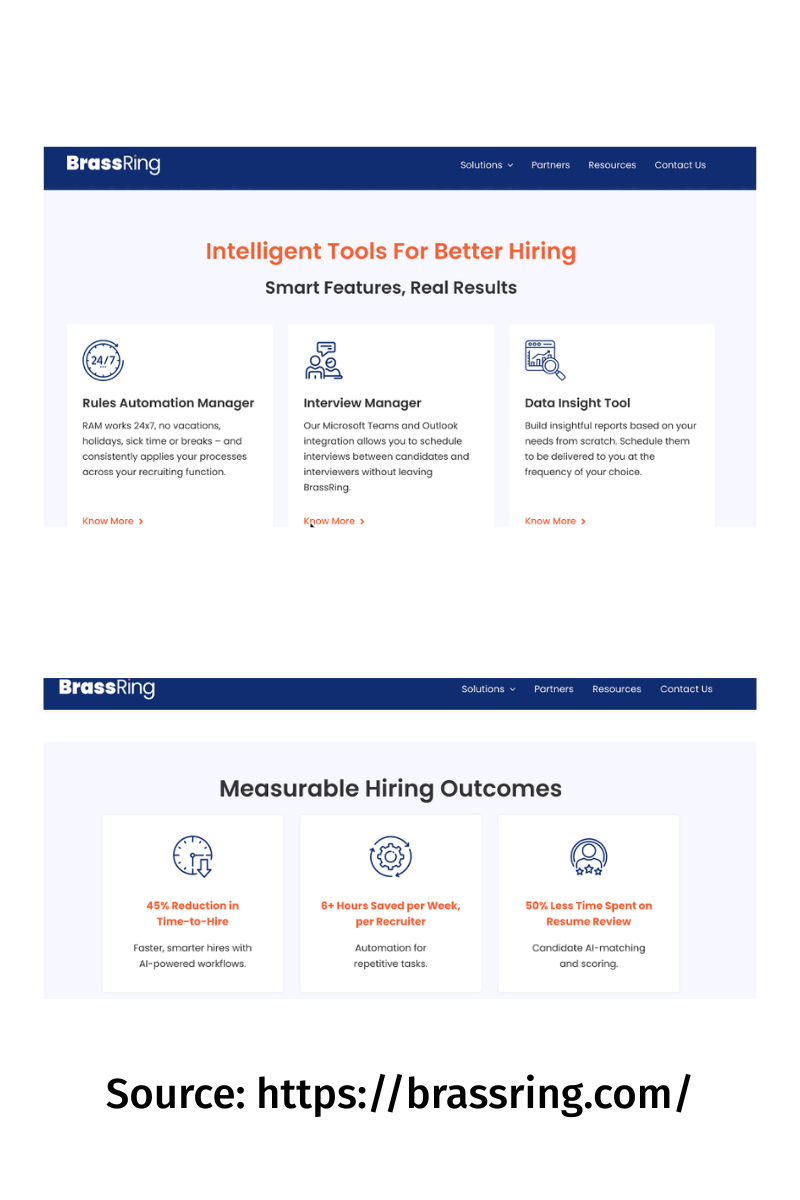
Maybe that’s true (doubtful given the product they use is the same one they sell). But, here’s the problem:
No one outside the company can verify it, because the screening sits in a black box no one is monitoring.
The provider tested the model once, before release, and called it fair. That test described one moment. The model you deployed 6 months ago is not the model running today. Training data ages. Fine-tuning compounds. Bias accumulates quietly, while every dashboard you own shows green.
Here’s how we solve for this. You measure the bias in production, before it reaches a person, and you report it as a number you can defend, not an opinion you can argue. And that’s exactly what Fusion Sentinel does. It sets a behavioral baseline for any API-connected model, then scans live output for deviation from that baseline using plain old statistics. When monitoring for demographic imbalance (inherent bias), it moves the conversation from "I think it is biased" to "here is the p-value." It produces audit-grade evidence aligned to ISO 42001 and the EU AI Act, built by lead auditors, not only engineers. And not just demographic imbalance, but policy adherence, goal convergence, and whatever comes down the road next.
We’ve audited hundreds of AI systems that led the protection of more than 2 million people from algorithmic harm. One prevented incident pays for years of monitoring. The average AI incident costs $4.5 million. An EU AI Act violation costs up to 6 % of global revenue.
The question is no longer whether your AI discriminates. Stanford answered that on May 26. The question is whether you find out before or after it reaches a headline, a courtroom, or a person who looks like Derek Mobley or Daniel Swanson.
Book a Fusion Sentinel pilot against your real production workload this quarter. Bring your model. We hand you the evidence.
And remember the sentence: “You were not rejected by a hundred employers. You were rejected by one algorithm, a hundred times.”
Make sure yours isn’t the one doing it.
Share this article
Related Articles
Europe Built Guardrails. America Published a Study Guide. OpenAI Proved Who Was Right.
Feb 18, 2026